How West Midlands Ambulance Service Uses Bariquins To Solve Their Bariatric Training Requirements
Case Study
About WMAS
West Midlands Ambulance Service University NHS Foundation Trust, or WMAS for short, serves a population of 5.6 million people in the Midlands area of England. With an average of 28% of adults in England living with obesity, this means WMAS potentially has over 1.5 million people living with obesity within their area.
Aside from the emergency and non-emergency duties an ambulance service usually provides, WMAS also run The National Academy, a facility for ambulance-based training.
The Care Quality Commission, the health and social care regulator in England, rates WMAS as ‘outstanding’.
What Problems Were WMAS Staff And Recruits Facing?
Teaching new skills to recruits and ensuring current personnel receive regular training is key to the professionalism of any organisation. This applies whether the training is mandatory or is required to keep up to date with any relevant developments or practices.
For WMAS, lack of a suitable means to provide realistic training scenarios for moving and handling people living with obesity, was a concern, given the regularity of bariatric callouts that they receive. As Adam Joynes of the WMAS National Academy explains “Prior to having any Bariquin products our staff were unable to experience the simulated size and weight of a bariatric patient. We previously used other products, however, they didn’t effectively simulate a bariatric patient.”
Kieran Kennedy, Education & Training Manager at The National Academy, agreed with the limitations, saying that previously they had used “A weighted manikin, that was only capable of being lifted from a lying position, it was non-adjustable in respect of weight and shape.”
Others had been forced to try a make-do approach. Ben Pallante of WMAS HART (Hazardous Area Response Team) said that their attempt at getting around the inadequacy, was “Mainly to add additional mannequins or weight to the equipment to make it real, failing that we would use a couple of staff, which isn’t great.” The shortfall meant Ben and his colleagues were unable to train with a good level of realism. And realism is necessary as WMAS HART continually support their colleagues on traditional ambulances during every shift due to patients requiring specialist bariatric equipment or skills.
How Did WMAS Address the Problems?
Following research into understanding the requirements that a bariatric mannequin needed to fulfil, WMAS selected Bariquins for their training. As Kieran Kennedy of The Training Academy explains “The adaptability and manoeuvrability met the needs of our department”.
His colleague Adam Joynes agreed, saying the Bariquin “is the only one I could find that meets our requirements. We love the fact it is modular, which helps us place the manikin into different training scenarios. It provides our staff/students with realistic sizes and weights of bariatric patients.”
Ban Pallante from WMAS HART stated they purchased the Bariquin for their team “Based on the course & the fact Bariquin is modular, stores a lot better than the other mannequins and is more realistic.”
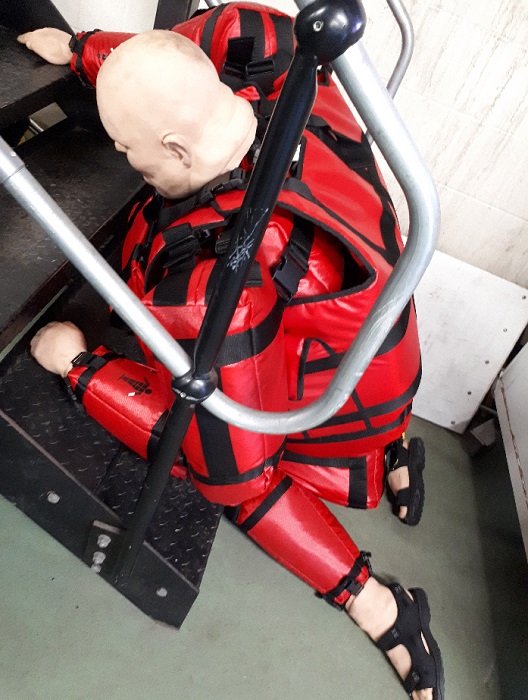
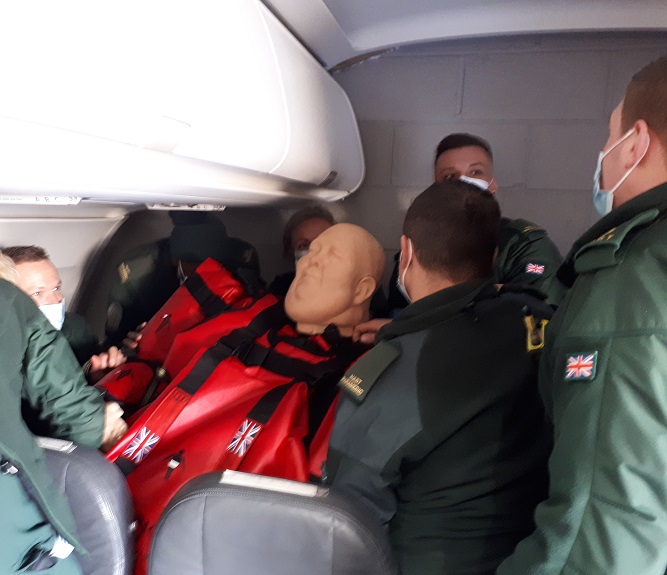
A Bariquin bariatric training manikin used in an ambulance training scenario.
How Have Bariquins Helped WMAS?
WMAS have been more than happy with their decisions to purchase Bariquins. The advantages go beyond just providing realism for their training scenarios. As Kieran Kennedy details “The manoeuvrability and storage affords us the option of moving these manikins to a range of different sites easily. The ability to alter weight and size and shape of the manikin, affords the learner with a better sensory, theoretical and practical understanding of how to handle larger patients.”
Ben Pallante is pleased too. When asked about how the Bariquin has helped, he replied “A lot, we are regularly using the Bariquin and we are putting him into a variety of different situations and circumstances to make our training more realistic.”
For Adam Joynes, he praised the decisions that WMAS made when buying the Bariquins as well, adding “Our recent purchases have enabled us to get both Barry and Benny – meeting the requirements for equality and inclusion. It also allows us to simulate and test our current equipment.”
And The Future?
With their CQC rating already ‘outstanding’, WMAS are maintaining their superior standards. They are ensuring this by providing their current and future staff with the best levels of teaching, training and professionalism.
One way that they are seeking to do this is by having all their trainers at the WMAS Education & Training Department at the Sandwell Hub, Oldbury trained on the Bariquins Train-The-Trainers course. This ensures that relevant skills and knowledge will be past on to current and future paramedics, ambulance technicians and patient transport service staff.
This can only be of benefit for the people that West Midlands Ambulance Service University NHS Foundation Trust serve. By simulating the scenarios that they are likely to face, their training prepares WMAS for real situations that they can then deal with efficiently and professionally.
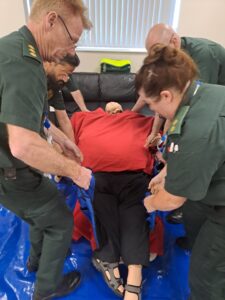
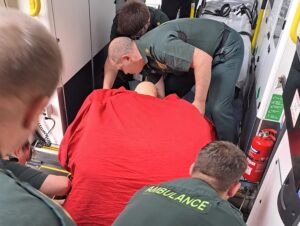
A Bariquin bariatric training mannequin collapsed in an ambulance
Enquiries
Make an enquiry
For more information or a quote, please fill in the form below, email, or call us: