
| Welcome to the Spring 2022 edition of the quarterly Bariquins‘ newsletter |
In this newsletter: Mannequins or Manikins? Bariatric or Obese? Free Bariquin Training Mannequin Demonstrations Barry & Benny’s Round-Up Please scroll down for all the details. |
Mannequins or Manikins? Bariatric or Obese?  Here at Bariquins, we receive enquiries and requests from diverse groups of people and organisations. They range from across the public, private and third sectors asking about our bariatric mannequins. Or is it obese manikins? Mannequin or Manikin? This was a big question when the company was first formed back in 2012. Mannequin or manikin? Which should we use? Obviously, manikin was easier to spell. However, we felt that the spelling of mannequin had more class and sophistication to it. This better portrayed our aim to produce a better, quality product. But should we go with manikin anyway?Still unsure whether to use mannequin or manikin, we consulted the experts, the dictionaries. Many definitions of both manikin and mannequin were identical, such as: A model of the human body, usually with movable and detachable parts, used in medical schools, art classes, etc.A life-size full or partial representation of the human body; a dummy.A jointed model of the human body.An anatomical model of the human body for use in teaching.A model of the human body, used by tailors, window dressers, artists, etc.However, when it came to manikin, there were a couple of definitions which definitely would not suit our product:A man who is short in stature.(now rare) A little man; dwarf.We could never describe our Barry or Benny as short or small. One of the characteristics of our mannequins is their actual large size. There’s no point training on lightweight options when practicing moving and handling people living with obesity. We designed Bariquins mannequins to offer real-world expectations when dealing with people living with obesity. Why use make-do pretences that lead to underestimating the care required? So, we chose mannequin.  Obese, Obesity, Plus-size and Bariatric? You may have noticed the reference to people living with obesity above. You might see people living with obesity described using other phrases or words. Such as plus-size people, obese people or bariatric people. The latter two phrases tend to stigmatise people and which is why we try our best to use people living with obesity foremost.We sometimes use people who are plus-size as this may not offend people living with obesity and is also a term that people living with obesity use to describe themselves. However, that’s not universal and plus-size people can also be offensive to some people living with obesity. And obese person, well that just focusses on the person’s obesity, not the fact that they’re actually an individual. We tend to use obese or obesity to describe populations or epidemics, things which are not so personal. The word bariatric itself comes from a medical definition meaning of or relating to the causes, prevention or treatment of obesity. If you’re interested, it’s derived from the Greek word baros meaning weight. (So, using the term bariatric person to describe a person living with obesity is rather like using the term paediatric person to describe a child.) Bariatric has, however, become a word used beyond the sphere of medicine which involves people living with obesity. Emergency services, for example, may term an extrication involving a person living with obesity as a bariatric rescue.  Obesity classifications. In the United Kingdom, NICE (National Institute for Health and Care Excellence) defines different weight classes according to their distinct BMI values: Underweight — BMI of less than 18.5 kg/m2 Healthy weight — BMI of 18.5-24.9 kg/m2 Overweight — BMI of 25-29.9 kg/m2 Obesity l — BMI of 30-34.9 kg/m2 Obesity ll — BMI of 35-39.9 kg/m2 Obesity lll — BMI of 40 kg/m2 or more Classifications of obesity differ around the world. For instance, the CDC (Centers for Disease Control and Prevention) in the US, categorize obesity as follows: Class 1: BMI of 30 to < 35 Class 2: BMI of 35 to < 40 Class 3: BMI of 40 or higher. Class 3 obesity is sometimes categorized as “severe” obesity. (Previously known as morbid obesity.)If you’re calculating a person’s body mass index or BMI, you need to divide their weight in kilograms by the square of their height in metres. (Here’s a link to an online calculator for you at https://www.nhs.uk/live-well/healthy-weight/bmi-calculator/ ) However, be careful when interpreting BMI in very muscular adults (such as those who play certain sports) and also in people with atrophy, as it is a less accurate measure of adiposity in these groups. |
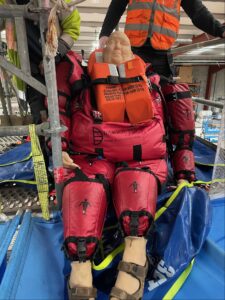
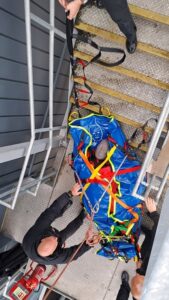
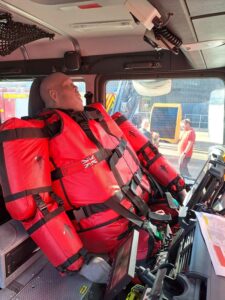
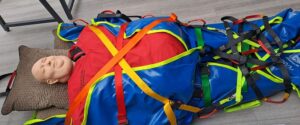
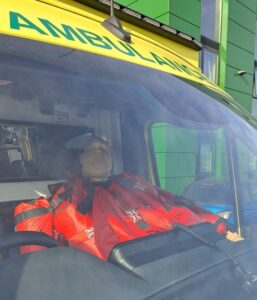
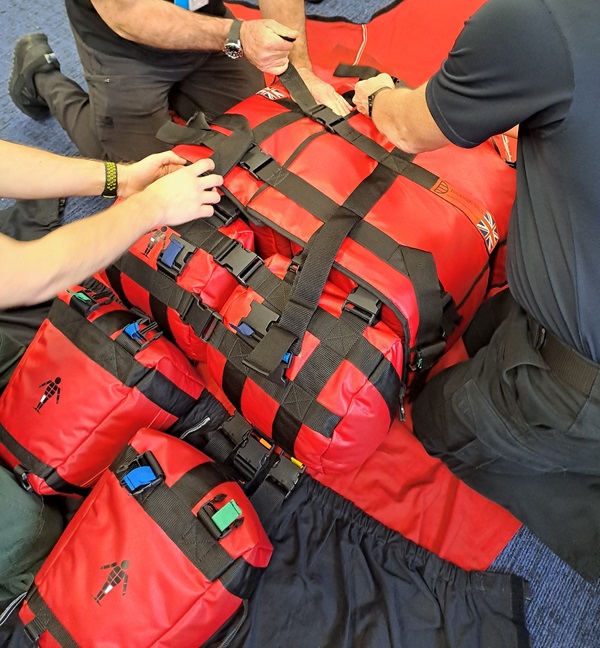
Free Bariquin Training Mannequin Demonstrations A reminder that it is possible to arrange a free demonstration of our Bariquin training mannequin.Experience has taught us that our demonstrations are far more effective. At exhibitions and shows, Barry and Benny are just another product on display. However, when demonstrated to an audience, all the real unique selling points of the Bariquin are on display. When one person turns up with the 25st/350lb/159kg mannequin and then quickly assembles him in front of the onlookers, it’s far more effective than a static display of our mannequins. Plus, at our demos, the audience can get a brief chance to practice how they would use a Bariquin in a scenario that they’re likely to encounter; whether it’s inserting slide sheets or re-positioning using a hoist, to extricating one from a vehicle or a tricky location. As there’s likely to be a wide variety of people present at the presentation, from end-user to budget-holder, there’s also the opportunity to discuss the merits of the Bariquin with all the interested parties. If you would like to find out more about Bariquins attending your workplace and being shown one of our mannequins, please contact us on enquiries@bariquins.com Unfortunately, this offer is available to the mainland UK only.  |
Barry & Benny’s Round-Up In this regular section, we look at news and other pieces of interest that have occurred since the last newsletter. ———————————————– Headlines, reports and articles that have caught our attention recently are listed below: Plenty of news from around the world, if you really needed evidence that the obesity epidemic isn’t going away. Starting with the most obese nation in the world. (And it’s probably not where you think.) Find out here. In Turkey, it’s claimed they’re the most obese country in Europe, as reported here. Finland are also having problems with their obesity rate is expected to increase over the next decade. See here. In Malta, they are also reporting that more of their inhabitants are living with obesity, as shown here. In the United Kingdom, one council has actually declared a state of emergency due to the rate of obesity for their residents, More information here. And for Europe as a whole, it is due to miss global heart health targets as obesity rises dramatically, as reported here. Other continents are seeing obesity increase too. For more on obesity’s effects in Africa, see here. Studies also show that obesity is accelerating the COVID-19 mortality rate for ethnic minorities, as reported here. ———————————————– Until next newsletter, Stay Safe and Healthy. |
