
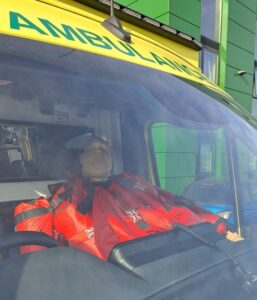
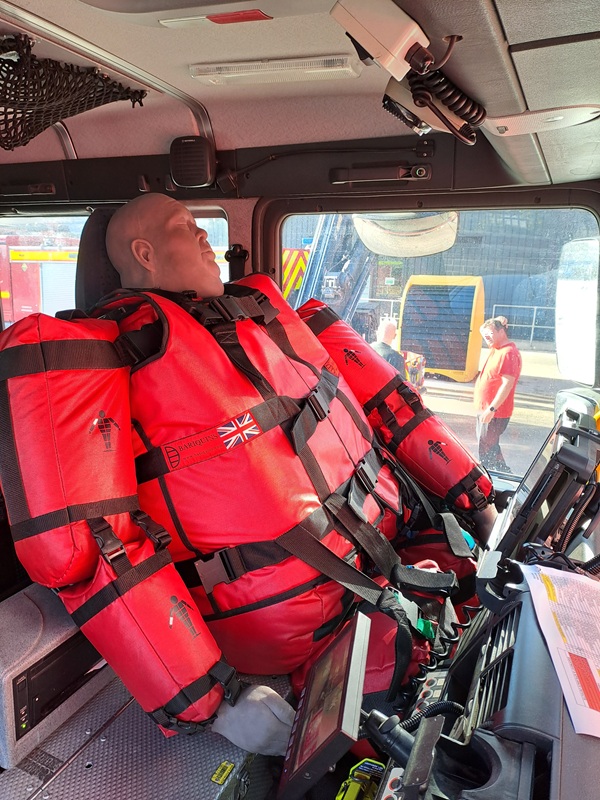
Welcome to the Autumn 2025 edition of the quarterly Bariquins‘ newsletter |
In this newsletter: Quarterly Quotes Helicopter Emergency Medical Service Training Train-the-Trainer Course with Avon FRS Barry & Benny’s Round-Up Time to Face the Facts… Please scroll down for all the details. |
Quarterly Quotes From Our Customers “Very well led course which has given me better ideas to use in training and incidents.” “(It aided by) Replication of real-life scenarios, planning of movement strategies.” “Our training has come on leaps and bounds since having the Bariquin.” |
Helicopter Emergency Medical Service Training
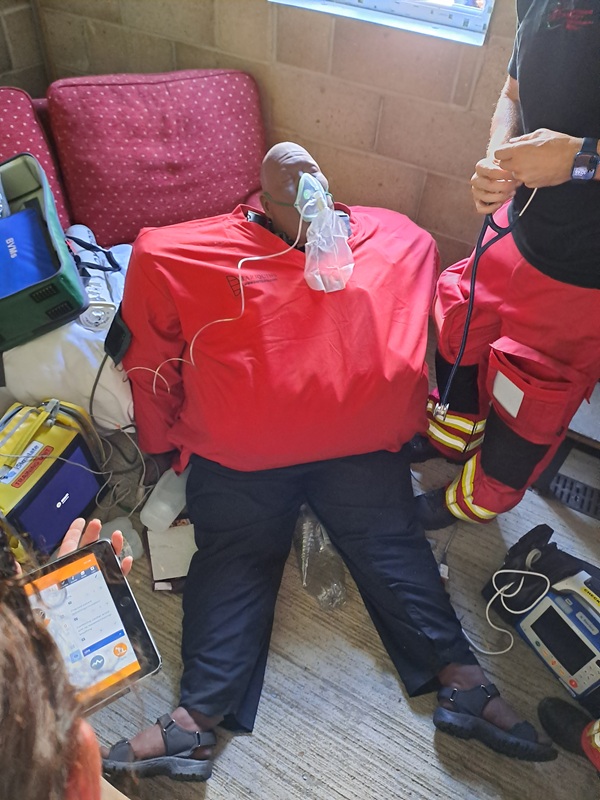
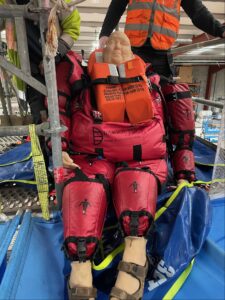
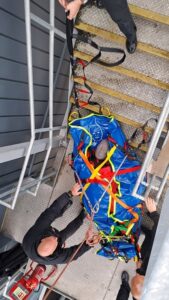
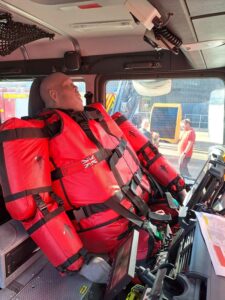
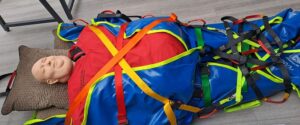
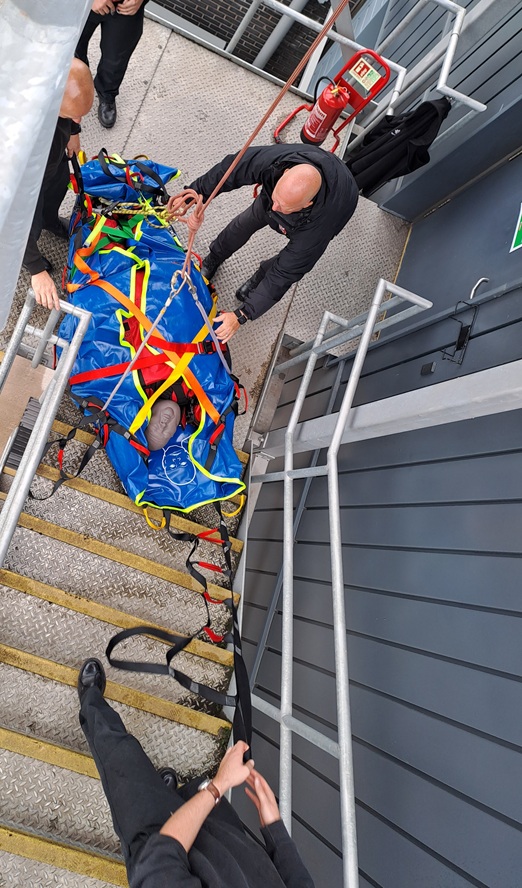
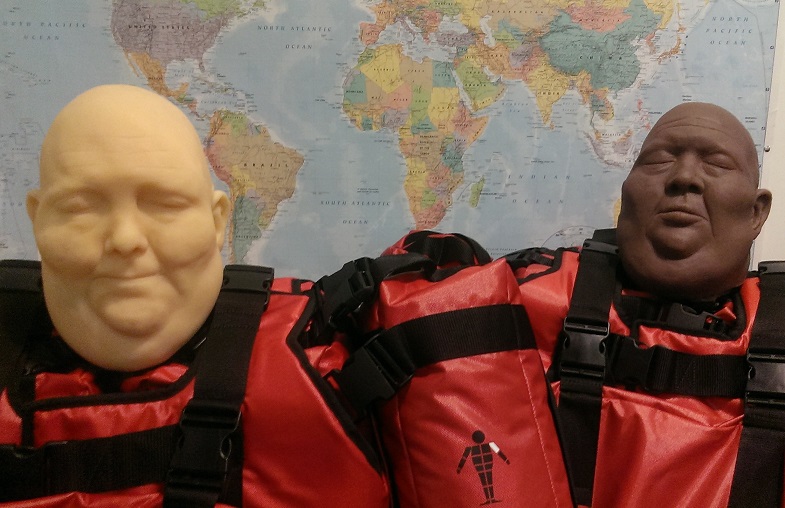
In August, Bariquins were proud to assist again in an intensive training exercise with the Helicopter Emergency Medical Service (HEMS) at the Cambridgeshire Fire and Rescue Service’s new Training Centre in Huntingdon. The event brought together air ambulance clinicians, paramedics, and support crew to rehearse a range of real-life emergency scenarios, where providing pre-hospital emergency medical care is requisite. As well as supplying one of our specialised bariatric training mannequins, we also showcased a range of equipment specifically designed for assisting in the safe moving and handling of people living with obesity. In one scenario, to simulate the challenges of dealing with bariatric patients the 25 stone (159kgs or 350 lbs) Bariquin was easily assembled inside a small room to represent the collapse of a person living with obesity. Rotations of HEMS participants were then led into the room to discuss how they would deal with complex rescue situations where patient weight and size are critical factors in pre-hospital equipment and medication. During the training, the HEMS participants were also introduced to the variety of bariatric equipment that could potentially be available at incidents that they may be responding to. These could involve the safe transfer of a bariatric patient from confined spaces, loading onto stretchers and even preparing for an airlift. The Bariquin mannequin helped those training to visualise how best to identify the suitable positioning and methods required to ensure patient and crew safety. The training highlighted the importance of planning for diverse patient needs, particularly in emergency response where seconds matter. Bariquins’ involvement gave the HEMS team the chance to prepare for the increasingly encountered but often high-risk scenarios. This builds confidence and can assist refining their techniques before facing such challenges in real life. By supporting events like this, Bariquins continue their commitment to improving training standards across healthcare and emergency services. The collaboration with Helicopter Emergency Medical Service demonstrates how realistic training tools can make a measurable difference, ensuring responders are better prepared for every eventuality. This exercise not only strengthened the skills of the HEMS team but also underlined the shared goal of both organisations: safeguarding patients through effective, practical, and innovative training solutions. If you require any further information about how Bariquins may be able to assist you, please contact us on info@bariquins.com |
Train-the-Trainer Course with Avon FRS |
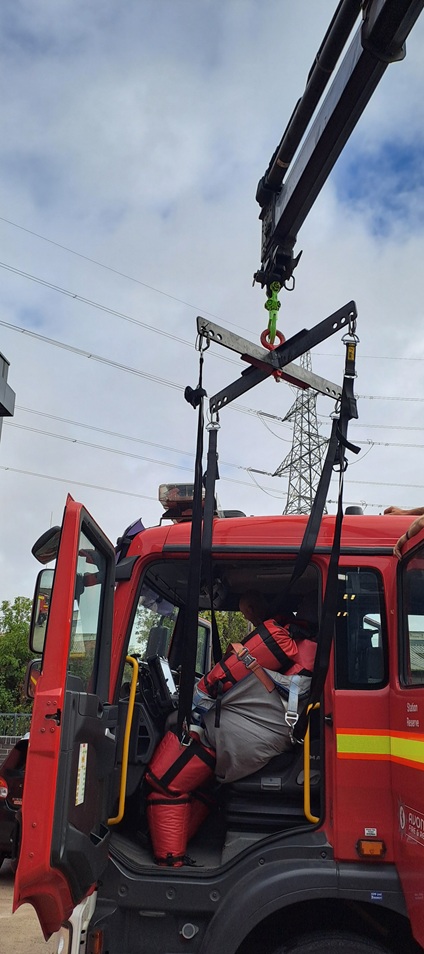
Bariquins was delighted to visit Avon Fire & Rescue Service recently to deliver a Train-the-Trainer course, supporting their commitment to safe and inclusive rescue practices.
The course gave Avon’s instructors the knowledge and hands-on experience they need to train their own teams in working with bariatric casualties. Using a Bariquins’ specialist mannequin, the group explored realistic rescue scenarios that tested techniques for safe lifting, moving, and casualty care.
One of the key benefits of the Train-the-Trainer approach is that it leaves long-lasting impact. Instead of a single session, Avon Fire & Rescue now has qualified trainers who can cascade what they’ve learned through to their colleagues. This means crew members can access consistent, practical guidance on how to respond when faced with the challenges of supporting a casualty that has been living with obesity.
The training didn’t just cover manual handling skills. It also emphasised the importance of dignity and empathy when working with bariatric people in emergency situations. Health conditions often associated with people living with obesity were also covered. By focusing on both the human and technical aspects of rescue, the course gave Avon’s trainers the confidence to approach these situations with professionalism and care.
Feedback from participants was extremely positive. Many highlighted the value of being able to practise with the realistic Bariquin mannequin as it replicates the weight and movement of a real person while allowing scenarios to be repeated safely. The trainers agreed this will help crews feel better prepared when responding to real incidents.
At Bariquins, we’re proud to support organisations like Avon Fire & Rescue Service, who are investing in their people and demonstrating forward-thinking leadership in this important area. Together, we’re helping to make emergency services safer, smarter, and more inclusive.
For more about Bariquins or to enquire about training packages, please email us on
Barry & Benny’s Round-Up
In this regular section, we look at news and other pieces of interest that have occurred since the last newsletter.
Headlines, reports and articles from around the world that have caught our attention recently are given below.
———————————————–
Starting with the UK:
- UK’s obesity and overweight epidemic costs £126bn a year. Source
- Ambulance services hit with bills totalling £27.5million to transport increasing numbers of patients living with obesity. Source
- Firefighters being called out to move more than 40 people living with obesity a week. Source
- Firefighters were called out five times in six days to help rescue paerson living with obesity. Source
- Council responds after higher charge fury for extra-large graves. Source
Now, the Rest of the World:
- UNICEF warns that obesity surpassed underweight as the more prevalent form of malnutrition this year, affecting 1 in 10 or 188 million school-aged children and adolescents. Source
- About a third of Canadians are obese, with a steeper increase during the pandemic. Source
- Severe obesity in U.S. children has skyrocketed since 2008. Source
- More than one-third of Mexico’s schoolchildren are overweight or obese. Source
- Up to 9 million Poles affected by obesity. Source
- Alarming obesity surge in Pakistan where 81% of women and 74% of men affected. Source
- Why obesity is emerging as India’s next big health emergency. Source
- Obesity crisis in Korea where they have rates for men at 50% and women at 28%. Source
Look out for more similar stories and information regarding obesity in our next newsletter.
Time to Face the Facts…
Here are 5 brief facts (with references) about how obesity creates additional problems for emergency situations in rural areas:
- Longer transport and response times amplify risks
Rural emergency medical services face much longer travel times to reach patients and to transport them to advanced care. When large or obese patients require rescue, the extra time needed for handling, mobilisation, and transport worsens outcomes for time-sensitive conditions like trauma or respiratory distress. BioMed Central+2MDPI+2
- More frequent complications among obese trauma patients in rural settings
In a regional rural trauma centre, obese patients were significantly more likely than normal-weight patients to require intubation, intensive care unit (ICU) admission, and longer ICU stays. Rural hospitals often lack the specialist staff or equipment to manage these complications efficiently. injuryjournal.com
- Limited equipment and infrastructure in rural EMS for bariatric rescues
Survey data from European air ambulance services shows that many lack standard operating procedures for transferring very heavy patients, do not consistently dispatch extra personnel, or have dedicated tools / beds. In rural settings, these logistical gaps are magnified by distance and fewer resources. PubMed
- Higher burden on rural rescue services and diversion of resources
Rural fire & rescue services are being increasingly called out for “bariatric assistance” (helping people too large to leave their home or needing specialised lifting). These calls require more personnel, specialized equipment, and often longer on-scene and transport times—thus diverting resources from other emergencies in remote communities where backup is already thin. BBC+2The Guardian+2
- Physiological and medical complications more difficult to manage pre-hospital
Obese patients in emergency care often have altered respiratory dynamics, difficulties with airway management, increased risk of comorbidities (e.g. heart disease, diabetes), and challenges establishing vascular access. In rural emergencies, where advanced backup (e.g. specialists, advanced life support, imaging) may be limited or far away, these complicating factors can increase mortality and morbidity. PubMed+2PubMed+2
Until the next newsletter,
Stay Safe and Healthy.
————————————
