
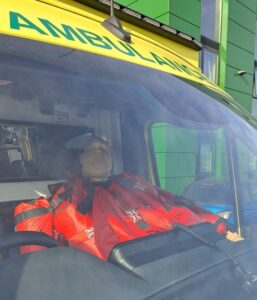
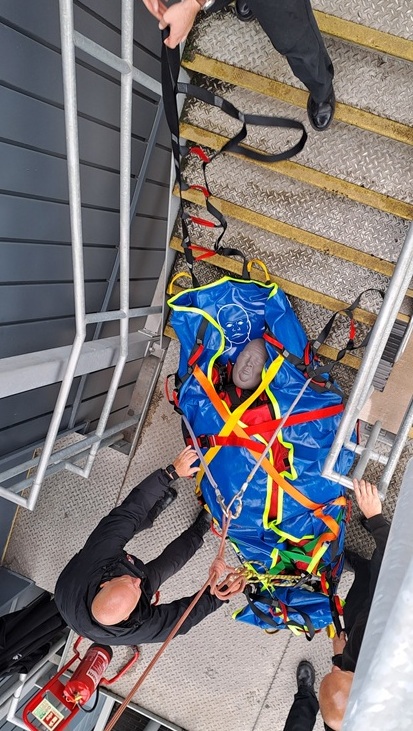
Welcome to the Winter 2025 edition of the quarterly Bariquins‘ newsletter
In this newsletter:
- Quarterly Quotes
- Bariquins’ New Phone Number
- Merry Christmas & Happy New Year
- Barry & Benny’s Round-Up
- Time to Face the Facts…
Please scroll down for all the details.
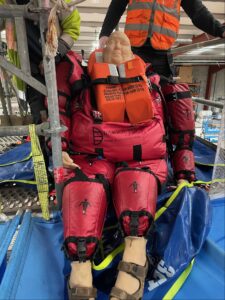
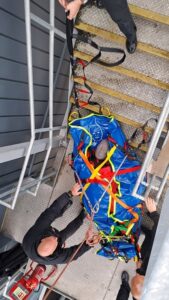
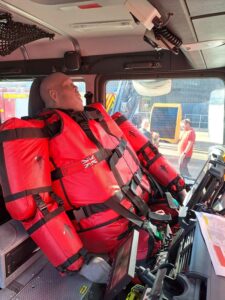
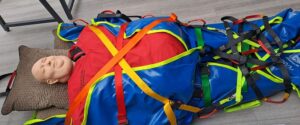
Quarterly Quotes From Our Customers “It helped with practical exercises, going through the full process. “(The Bariquin is) “a great addition and useful training aid.” “Gives a life like experience but can also be help (to) identify learning.” |
Bariquins’ New Phone Number  As it’s nearly Christmas, we’ll keep this newsletter as brief as we can. We’ve updated our phone system. The new number to contact us on is now 0333 577 5650 Make a note of it. You can use it for all enquires for products and training or anything Bariquins related. And if you prefer to email us, please use info@bariquins.com |
Merry Christmas & Happy New Year  Bariquins would like to wish everybody a Merry Christmas and a Happy New Year. We would especially like to pass this on to all those who will be working over the Christmas and New Year holiday period, helping to keep us safe, healthy and looking after us if anything does go wrong. Here’s to a peaceful, safe and healthy 2026. |
Barry & Benny’s Round-Up In this regular section, we look at news and other pieces of interest that have occurred since the last newsletter. Headlines, reports and articles from around the world that have caught our attention recently are given below. News stories from around the world first: Patients living with severe obesity face medical discrimination. Source Harvard study classifies 70% of U.S. adults as obese under the new definition. Source Adult obesity rates vary across U.S. geographic regions and rural/urban areas. Source In Chile, 42% of adults over 20 are living with obesity, Argentina has 39% and Paraguay and Uruguay at 36%. Source Korea’s obesity rate hits 34%. Source Nearly 62% of Korean men in 40s are living with obesity. Source Screenings in Malaysia found that 31% were living with obesity, while another 31% were overweight. Source Obesity is on the rise in Istanbul and the Black Sea region. Source In the UK:Firefighters called in to rescue patients living with severe obesity who were trapped in their homes. Source Urgent action needed to tackle Wales’ obesity crisis where 62% of adults are overweight or obese and 26% are obese. Source Look out for more similar stories and information regarding obesity in our next newsletter. |
 Time to Face the Facts… Here are 5 crisp, evidence-based facts that link obesity, accidents, and the holiday period, each with sources you can follow up on. People tend to gain weight over the holiday period. Multiple studies and reviews show small but consistent weight (and body-fat) gains between late November and early January — gains that, if repeated yearly, can contribute to obesity. PMC+1 Obesity is associated with higher risk of serious injury and death in motor-vehicle crashes. Analyses of crash and fatality data find that higher BMI is linked to greater odds of severe upper-body injuries and increased fatality risk after collisions. (That is an association seen across multiple cohorts.) PubMed+1 Obesity increases risk of slips, trips and falls (and related occupational injuries). Workplace studies show obese employees have higher rates of fall-related and lower-extremity injuries — injuries that can be more frequent or more severe in periods of increased activity (e.g., holiday shopping, decorating, extra work). PubMed+1 Holiday periods have higher travel and traffic-fatality rates (and therefore more crash exposure). National safety organizations and epidemiologic studies report elevated motor-vehicle fatalities and a small but measurable rise in crash odds during major holidays (Thanksgiving–Christmas–New Year), driven by increased travel and risky behaviours (e.g., alcohol). More exposure + higher baseline risk factors (like obesity) raise the population burden of serious crash outcomes. Injury Facts+1 Emergency-department visits and medically-consulted injuries rise during holidays — and obesity can worsen outcomes. Studies of holiday vs non-holiday ED use find more visits and rehospitalisations during holiday periods; because obesity is linked to greater injury severity and complications, people with obesity are more likely to experience worse outcomes from the increased holiday accident burden. PMC+1 |
| ———————————— Until the next newsletter, Stay Safe and Healthy. ———————————— |
