| Welcome to the Spring 2026 edition of the quarterly Bariquins‘ newsletter |
In this newsletter: Quarterly Quotes New Marine Evacuation System Trialled with a Bariquin Barry & Benny’s Round-Up Time to Face the Facts… Please scroll down for all the details. |
Quarterly Quotes From Our Customers “The mannequin gave an appreciation of the issues that present when dealing with large passengers.” “Great to use the real weight and size in training.” “Realism and thought provoking.” |
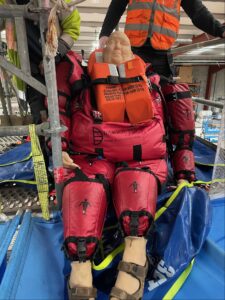
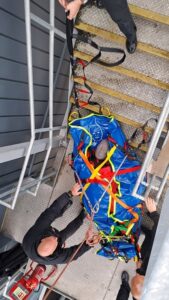
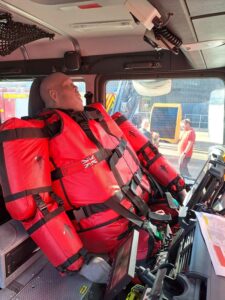
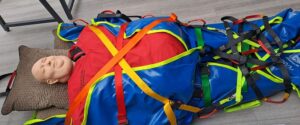
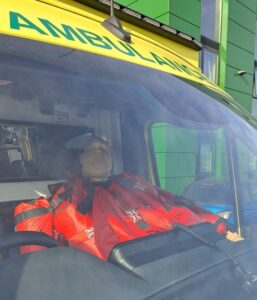
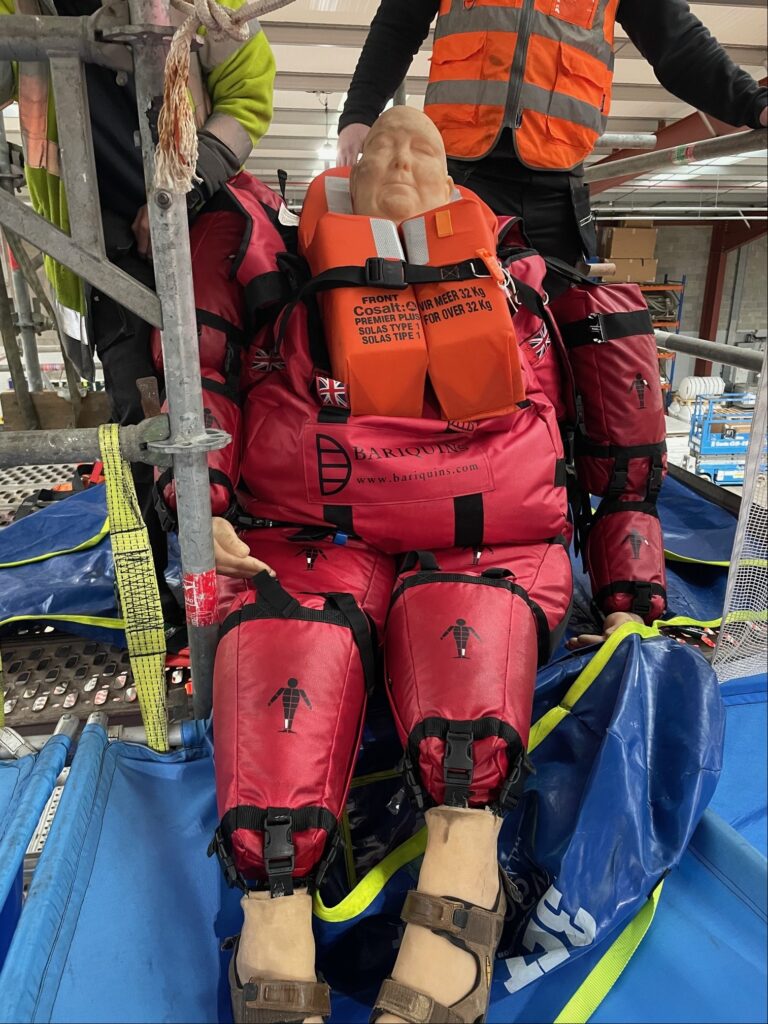
New Marine Evacuation System Trialled with a Bariquin  The Bariquin in preparation for the descent through the maritime evacuation slide. Putting Innovation to the Test: Survitec Trials New Marine Evacuation System with Bariquin Mannequin When it comes to safety at sea, Survitec has never been shy about pushing boundaries. Their latest round of testing for a new Marine Evacuation System is a perfect example — and it involved a rather unusual guest: one of our Bariquins. If you haven’t met one before, a Bariquin is a full‑sized, weighted training mannequin designed to realistically represent an adult living with obesity. Unlike traditional dummies, it distributes weight just like a real person, which makes it ideal for testing evacuation equipment under genuine, real‑world conditions. In other words, if your system can handle a Bariquin, it can handle pretty much anything. Survitec brought the mannequin into their evacuation system trials to ensure the new system performs safely and reliably for passengers of all body types. The team wanted to understand how the chute, raft interface, and overall flow of the evacuation process would respond when put under realistic strain. The Bariquin didn’t disappoint — or rather, it did exactly what it was supposed to do: behave like a real human with weight throughout the Bariquin, realistic limb flexions, and potential unpredictability. This was all done without harming any other test guinea pigs too. The results gave Survitec’s engineers valuable insights into load distribution, slide dynamics, and the practical challenges of assisting passengers during an emergency. It’s the kind of testing that doesn’t just tick a regulatory box but genuinely improves safety outcomes. What stands out most is Survitec’s commitment to designing equipment for everyone, not just the “average” passenger. By incorporating Bariquin testing early in development, they’re ensuring their new Marine Evacuation System is robust, inclusive, and ready for the realities of modern maritime travel. It’s a small glimpse into the thoughtful engineering that goes on behind the scenes — and a reminder that sometimes the most important innovations start with a very heavy mannequin taking a very important slide. For more information on Bariquins, email us at info@bariquins.com |
Barry & Benny’s Round-Up In this regular section, we look at news and other pieces of interest that have occurred since the last newsletter. Headlines, reports and articles from around the world that have caught our attention recently are given below. ———————————————– News stories from here in the UK: 17 teams needed to extract patient living with obesity as UK firefighters called every 3 hours or 15,849 times. Source The shocking number of obesity-related firefighter rescues in Lancashire revealed. Source South Wales has second highest rate of firefighters called to people living with obesity. One call-out took 10 hours. Source Northern Ireland FRS third among UK firefighting services for bariatric rescues, carrying out 859 rescues involving people with obesity between 2020 and 2025. Source People with obesity 70% more likely to be hospitalised by or die from infection, study finds. Source Coffins ‘too large to be cremated’ amid obesity crisis. Size of caskets has increased by six inches in 25 years, and some bodies are too big for the largest ones, say industry insiders. Source And from around the rest of the world: Six million Italians are living with obese, a crisis affecting 1 in 3 children and numbers are growing. Source India is facing a rapid rise in obesity, with nearly one in four adults now classified as obese. Source One in three Korean adults is living with obesity, a 30.8% increase over the past decade. Source Nearly 1 in 2 Hongkongers is overweight or living with obesity. Source Number of Americans living with obesity jumps from 19% in 1990 to 43% in 2022. Source The share of Americans medically obese is projected to rise to almost 50% by 2035. Source Nearly 40% of Fiji population is classified as obese. Source Growing obesity crisis affecting Australian productivity, costing $90 billion-a-year by 2032. Source Look out for more similar stories and information regarding obesity in our next newsletter. |
 Time to Face the Facts… Five Verified Facts About Emergencies Involving Passengers with Obesity on Cruise Ships. 1. Obesity increases the likelihood of medical emergencies at sea because it is strongly associated with chronic conditions that frequently require urgent care. Obesity is linked to cardiovascular disease, type 2 diabetes, and respiratory problems, all of which are among the most common serious medical events treated on cruise ships. Cardiovascular events alone account for 80% of onboard deaths. Source 2. Cruise ship medical centres treat many older passengers, and age‑related obesity increases emergency risk. Roughly half of all passengers seeking medical care onboard are over 65, a demographic with higher obesity prevalence and higher rates of acute illness. This age group is more likely to experience emergencies such as cardiac events, severe infections, or mobility‑related injuries. Source 3. About 10% of all medical cases onboard are classified as emergencies or urgent care, and obese passengers are disproportionately represented due to comorbidities. The CDC reports that 10% of medical centre visits require urgent or emergency intervention. Because obesity increases the risk of acute cardiac, respiratory, and metabolic crises, obese passengers are more likely to fall into this emergency category. Source 4. Severe emergencies involving obese passengers may require medical evacuation, which is logistically complex and riskier at sea. When onboard facilities cannot manage a critical case, ships must coordinate ship‑to‑shore medical evacuation, often by helicopter. The CDC notes that evacuations are challenging and carry additional risks for medically unstable patients—risks heightened when obesity complicates mobility, positioning, or stabilisation. Source 5. Cruise ships must maintain emergency equipment and staffing capable of treating obese patients, including advanced cardiac care and trauma management. American College of Emergency Physicians guidelines require ships to carry: Cardiac monitors and defibrillators, Advanced airway equipment, Trauma stretchers and wheelchairs. Physicians trained in emergency medicine and advanced life support. These requirements exist because ships routinely manage emergencies involving passengers with obesity‑related conditions. Source |
| ———————————— Until the next newsletter, Stay Safe and Healthy. ———————————— |